GEO Is the New SEO: Why Your Mumbai Business Needs to Rank Inside ChatGPT, Not Just Google
GEO Is the New SEO: Why Your Mumbai Business Needs to Rank Inside ChatGPT, Not Just Google
Written by
Zenia Khan
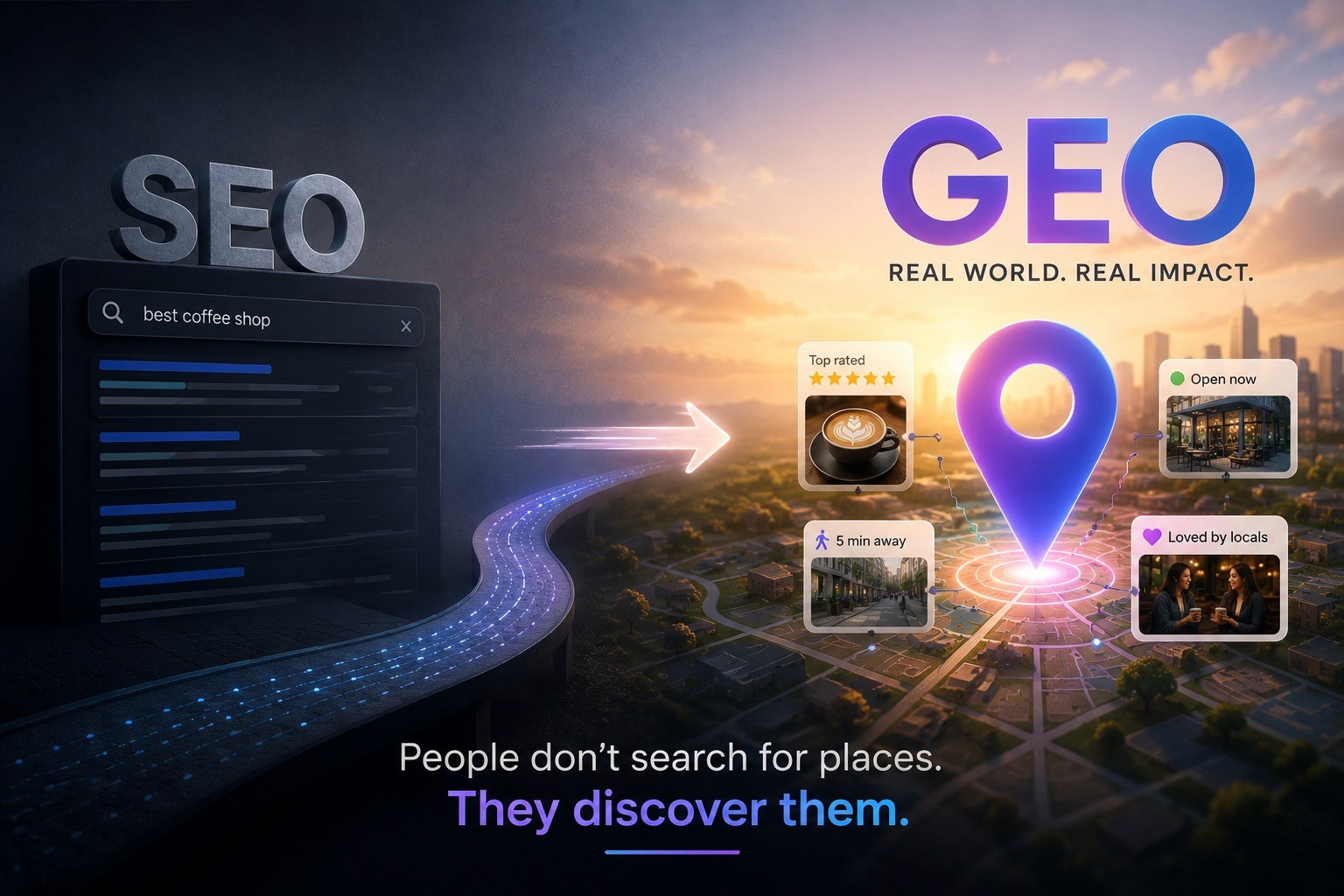
Quick question: when was the last time you actually clicked through ten blue links on Google?
Be honest. For most of us, the answer is "a while ago." These days, when you type a question, AI Overview gives you a tidy summary at the top of the page, and you either get your answer right there or you ask Perplexity, ChatGPT, or Gemini instead. Nobody's scrolling anymore. Nobody's comparing five tabs. The answer just... shows up.
And here's the uncomfortable part for business owners: if your brand isn't mentioned in that answer, you don't exist. Not to that customer, not at that moment, not for that decision.
This is the shift everyone in digital marketing is talking about right now, and it has a name - Generative Engine Optimization, or GEO (some people call it AEO, Answer Engine Optimization). At Spacebar Digital Solution, we've been watching this play out across client accounts for months, and frankly, the businesses that get ahead of it now are going to have a real edge over the ones still obsessing over keyword density in 2027.
Wait, Isn't This Just SEO With a New Name?
Not exactly, and the difference matters.
Traditional SEO is built around ranking a page. You optimize a URL, you build backlinks to it, you stuff (okay, sprinkle) keywords into headers, and Google decides where that page sits on the results page. The user clicks, lands on your site, and you take it from there.
GEO works differently. AI tools like ChatGPT, Google's AI Mode, and Perplexity don't send a user to a page, they read dozens of pages, digest them, and synthesize one answer. Your brand either gets pulled into that synthesis or it doesn't. There's no "position 3" to fight for. There's just "mentioned" or "invisible."
That changes everything about how content needs to be built. A page that's written purely to satisfy a Google algorithm - thin, keyword-heavy, designed around one search term is exactly the kind of content AI models tend to skip over. What gets cited instead is content that reads like it was written by someone who actually knows what they're talking about: specific, structured, backed by real expertise, easy for a machine to lift a clean fact or quote from.
Why This Should Matter to You Right Now
Search Engine Journal recently reported that Meta is aiming to fully automate advertising with AI by the end of 2026, and that's just one signal among many that AI is no longer a side feature of marketing - it's becoming the infrastructure underneath it. Industry analysis from TheeDigital also notes that most searches in 2026 get answered before the user ever visits a website, even though AI-driven traffic tends to convert at a noticeably higher rate than traditional clicks. People still research on ChatGPT or AI Overviews first - they just come back to a brand directly when they're ready to buy.
So the businesses showing up in those AI summaries aren't just getting visibility. They're getting visibility with intent attached. Someone who reaches your website after an AI conversation already trusts you a little. They've already been "introduced."
For a Mumbai business competing against hundreds of agencies, clinics, real estate brokers, or D2C brands all chasing the same Google keywords, that's a genuinely new way to win - one most local competitors haven't even noticed yet.
So What Actually Works for GEO?
We'll keep this practical, because theory doesn't move the needle, action does.
Write for citation, not just clicks. AI models love content with clear, lift-able facts: a stat, a defined process, a direct answer to a direct question. If your page buries the actual answer under three paragraphs of fluff before getting to the point, it's not getting quoted.
Build topical depth, not isolated posts. One blog about "best digital marketing agency in Mumbai" won't cut it anymore. What works is a cluster - multiple connected pieces that together demonstrate real authority on a subject, the kind of network that signals "this brand actually knows this space" rather than "this brand wrote one SEO post about it."
Use structured data properly. Schema markup, FAQ structures, clear headings - these aren't decoration. They're literally how machines parse your page. A page that's easy for a crawler to understand is a page that's easy for an AI model to summarize accurately.
Get mentioned elsewhere, not just linked. Backlinks still matter, but AI models also weigh how often your brand is discussed across the web - reviews, forums, press mentions, comparison articles. Being talked about, not just linked to, builds the kind of authority these systems trust.
Don't abandon classic SEO. This isn't either/or. Strong technical SEO, fast load times, and solid on-page basics are still the foundation everything else sits on. GEO is an additional layer, not a replacement.
What This Looks Like for a Local Brand
Picture a diagnostic centre in Mumbai. Someone asks ChatGPT, "which diagnostic labs in Mumbai offer same-day blood test results with home collection?" If that lab has published clear, specific content answering exactly the pricing, turnaround time, areas covered - there's a real shot at being named. If their website only has a generic "About Us" page and a phone number, they're invisible in that conversation, even if they're three minutes from the person asking.
Same story for a real estate brand, a wellness clinic, an ecommerce store, a wealth management firm - basically every kind of business we work with. The brands willing to build genuinely useful, specific, well-structured content are the ones AI tools will keep reaching for.
The Bottom Line
Google isn't going away, and neither is traditional SEO. But the businesses thinking only about rankings on a results page are already a step behind. The real opportunity right now is becoming the answer - the brand an AI model trusts enough to mention by name when someone asks a real question.
That takes more than a few keyword tweaks. It takes a content strategy built around genuine expertise, structured properly, and published consistently enough to build the kind of authority these systems recognize.
If you'd rather not figure this out through trial and error, that's literally what we do all day. Spacebar Digital Solution LLP works with Mumbai brands on exactly this kind of SEO and GEO-ready strategy that ranks today and still gets cited tomorrow. Book a call with Spacebar Digital Solution LLP and let's talk about where your brand actually stands.
FAQs
Is GEO replacing SEO?
No. Think of GEO as an extra layer on top of solid SEO fundamentals - both matter, and they reinforce each other.
How long does it take to see results from GEO?
Similar to organic SEO, expect a few months of consistent, structured content before AI tools reliably start citing your brand. It's a compounding effort, not a switch you flip.
Do small or local businesses actually benefit from this?
Yes, arguably more than large brands. Local, specific answers (think "Best marketing agency in Mumbai" rather than generic claims) are exactly what AI models are looking to surface.
Wait, Isn't This Just SEO With a New Name?
Not exactly, and the difference matters.
Traditional SEO is built around ranking a page. You optimize a URL, you build backlinks to it, you stuff (okay, sprinkle) keywords into headers, and Google decides where that page sits on the results page. The user clicks, lands on your site, and you take it from there.
GEO works differently. AI tools like ChatGPT, Google's AI Mode, and Perplexity don't send a user to a page, they read dozens of pages, digest them, and synthesize one answer. Your brand either gets pulled into that synthesis or it doesn't. There's no "position 3" to fight for. There's just "mentioned" or "invisible."
That changes everything about how content needs to be built. A page that's written purely to satisfy a Google algorithm - thin, keyword-heavy, designed around one search term is exactly the kind of content AI models tend to skip over. What gets cited instead is content that reads like it was written by someone who actually knows what they're talking about: specific, structured, backed by real expertise, easy for a machine to lift a clean fact or quote from.
Why This Should Matter to You Right Now
Search Engine Journal recently reported that Meta is aiming to fully automate advertising with AI by the end of 2026, and that's just one signal among many that AI is no longer a side feature of marketing - it's becoming the infrastructure underneath it. Industry analysis from TheeDigital also notes that most searches in 2026 get answered before the user ever visits a website, even though AI-driven traffic tends to convert at a noticeably higher rate than traditional clicks. People still research on ChatGPT or AI Overviews first - they just come back to a brand directly when they're ready to buy.
So the businesses showing up in those AI summaries aren't just getting visibility. They're getting visibility with intent attached. Someone who reaches your website after an AI conversation already trusts you a little. They've already been "introduced."
For a Mumbai business competing against hundreds of agencies, clinics, real estate brokers, or D2C brands all chasing the same Google keywords, that's a genuinely new way to win - one most local competitors haven't even noticed yet.
So What Actually Works for GEO?
We'll keep this practical, because theory doesn't move the needle, action does.
Write for citation, not just clicks. AI models love content with clear, lift-able facts: a stat, a defined process, a direct answer to a direct question. If your page buries the actual answer under three paragraphs of fluff before getting to the point, it's not getting quoted.
Build topical depth, not isolated posts. One blog about "best digital marketing agency in Mumbai" won't cut it anymore. What works is a cluster - multiple connected pieces that together demonstrate real authority on a subject, the kind of network that signals "this brand actually knows this space" rather than "this brand wrote one SEO post about it."
Use structured data properly. Schema markup, FAQ structures, clear headings - these aren't decoration. They're literally how machines parse your page. A page that's easy for a crawler to understand is a page that's easy for an AI model to summarize accurately.
Get mentioned elsewhere, not just linked. Backlinks still matter, but AI models also weigh how often your brand is discussed across the web - reviews, forums, press mentions, comparison articles. Being talked about, not just linked to, builds the kind of authority these systems trust.
Don't abandon classic SEO. This isn't either/or. Strong technical SEO, fast load times, and solid on-page basics are still the foundation everything else sits on. GEO is an additional layer, not a replacement.
What This Looks Like for a Local Brand
Picture a diagnostic centre in Mumbai. Someone asks ChatGPT, "which diagnostic labs in Mumbai offer same-day blood test results with home collection?" If that lab has published clear, specific content answering exactly the pricing, turnaround time, areas covered - there's a real shot at being named. If their website only has a generic "About Us" page and a phone number, they're invisible in that conversation, even if they're three minutes from the person asking.
Same story for a real estate brand, a wellness clinic, an ecommerce store, a wealth management firm - basically every kind of business we work with. The brands willing to build genuinely useful, specific, well-structured content are the ones AI tools will keep reaching for.
The Bottom Line
Google isn't going away, and neither is traditional SEO. But the businesses thinking only about rankings on a results page are already a step behind. The real opportunity right now is becoming the answer - the brand an AI model trusts enough to mention by name when someone asks a real question.
That takes more than a few keyword tweaks. It takes a content strategy built around genuine expertise, structured properly, and published consistently enough to build the kind of authority these systems recognize.
If you'd rather not figure this out through trial and error, that's literally what we do all day. Spacebar Digital Solution LLP works with Mumbai brands on exactly this kind of SEO and GEO-ready strategy that ranks today and still gets cited tomorrow. Book a call with Spacebar Digital Solution LLP and let's talk about where your brand actually stands.
FAQs
Is GEO replacing SEO?
No. Think of GEO as an extra layer on top of solid SEO fundamentals - both matter, and they reinforce each other.
How long does it take to see results from GEO?
Similar to organic SEO, expect a few months of consistent, structured content before AI tools reliably start citing your brand. It's a compounding effort, not a switch you flip.
Do small or local businesses actually benefit from this?
Yes, arguably more than large brands. Local, specific answers (think "Best marketing agency in Mumbai" rather than generic claims) are exactly what AI models are looking to surface.
Spacebar Digital Solution LLP ®. All rights reserved.
Spacebar Digital Solution LLP ®. All rights reserved.
Spacebar Digital Solution LLP ®. All rights reserved.